
Albert Mehrabian is a prominent Armenian-born American psychologist whose name is inextricably linked to the study of nonverbal aspects of communication. His theories and research have had a significant impact on understanding how people exchange information without words. Mehrabian investigated how tone of voice, gestures, and facial expressions affect the interlocutor's perception of communicated emotions and information.
Early years
Born in 1939 in Iran, Albert Mehrabian soon developed an interest in psychology and communication. His early education was filled with a desire to understand how people interact with each other on an unconscious level. After moving to the United States, Mehrabian continued his education, earning a Ph.D. in psychology from the Massachusetts Institute of Technology, which provided a strong foundation for his future scientific accomplishments.
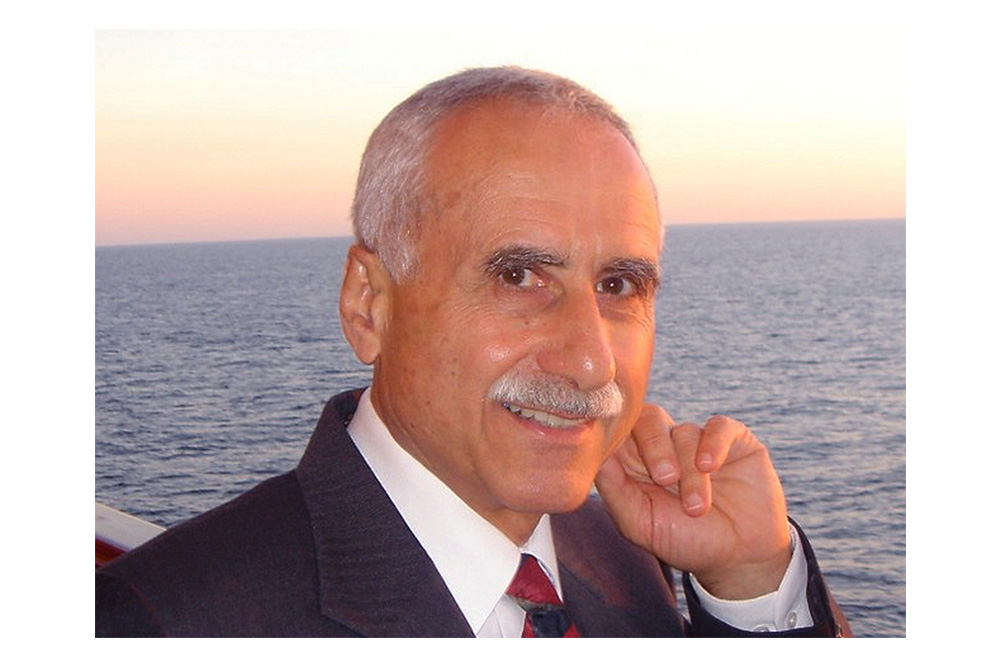
Scientific achievements
Mehrabian's scientific career has centered on the study of nonverbal aspects of communication. In 1967, he formulated the famous 7%-38%-55% rule, which states that in the transmission of emotional messages, only 7% of information is conveyed through words, 38% through voice intonation, and 55% through nonverbal cues such as facial expressions and gestures. This discovery has had a profound impact on the development of communication skills and the understanding of interpersonal interactions in general.
Interesting discoveries
One of the most interesting discoveries of Mehrabian's work is the realization that non-verbal cues in communication play a critical role in forming a first impression. This emphasizes the importance of not only the words we say, but also how we say them and our nonverbal communication. Mehrabian also drew attention to the importance of consistency between the verbal and non-verbal message in order to achieve clarity and effective communication.
Albert Mehrabian's research remains relevant today, continuing to inspire professionals in the fields of psychology, marketing, management, and education to delve deeper into the nonverbal aspects of communication. His work emphasizes that to fully understand interpersonal communication, all components of the communication process must be considered, including those that are not conveyed by words.