Lusher's Color Test is a projective technique that is used to measure a person's psychophysiological state, stress tolerance, activity and communication skills. The color test can reveal the level of stress resistance, communication skills, psychophysiological state, presence and causes of stress.
This test is very easy and quick to pass, and at the same time is considered "deep", created for specialists, psychiatrists, psychologists and doctors. Each color carries a certain energetic charge, which causes both physiological and psychological effects in a person.
It is a projective technique and is based on the fact that the choice of color often reflects a person's focus on a certain kind of activity, on the satisfaction of needs, reflects their functional state.
History of the test
Created by Max Lusher back in the middle of the XX century, the test initially did not get the approval among the scientific community, but over time his ideas gained popularity. The first version of the test was published in 1948, and in 1970 a manual was published. Also Lusher covered the basics of the method of color diagnostics in his books "Personality Signals" and "Four-Color Man". The test was based on 4500 color tones, which he selected independently.
Full and easy abbreviated versions of Lüscher's test
"Lüscher's Clinical Color Test."
These are the seven color tables, a cumbersome version that is used in cases where it is really needed. The colors of these seven tables are as follows:
- "gray";
- "8 colors";
- "4 primary colors";
- "blue";
- "green";
- "red";
- "yellow."
"Quick" or "Abbreviated Lusher's test"
A concise and convenient test with eight rows of colors:
- gray (0);
- dark blue (1);
- blue-green (2);
- red-yellow (3);
- yellow-red (4);
- red-blue or purple (5);
- brown (6);
- black (7).
"Color Election Method."
In 2010, Sobchik Lyudmila Nikolaevna proposed an adapted version of the abbreviated test - the "Method of Color Elections" (MCE). This is how she commented on her work:
"<...> the terminology and the essence of the interpretive maxims in the modified test are significantly revised in accordance with the identified shortcomings of the original version of the method and taking into account the modern psychological thesaurus".
The author of the test
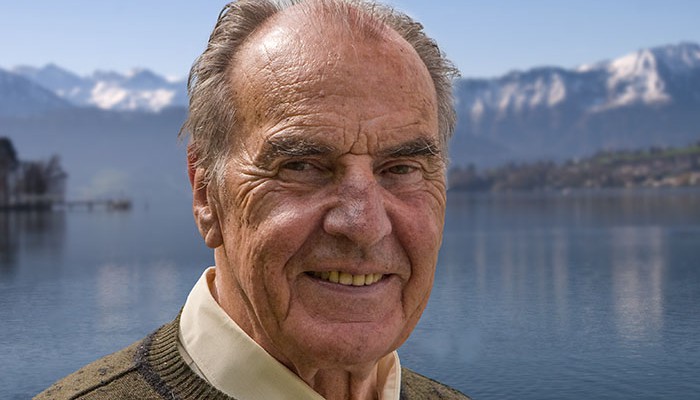
Max Luscher (M. Luscher) was born on September 9, 1923 in Switzerland in the city of Bezel. He studied sociology, philosophy of law and religion, clinical psychiatry, psychotherapeutic methods. In 1949 he successfully defended his dissertation in philosophy and psychology "Color as a tool for psychodiagnosis". Lüscher's main activities include conducting training seminars for psychologists-psychotherapists, supporting scientific research in the field of color diagnostics, and lecturing in Eastern and Western Europe, the USA and Australia. He was an honorary member of the International Rorschach Society in Rome, president of the Lüscher Diagnostic Center in Rome and of the Max Lüscher Institute in Padua.
Possibilities of Lusher's color test
- It will help to determine the presence and causes of psychological stress.
- It indicates the real state of a person, not the desired one.
- It allows you to make a quick and deep analysis of personality.
Instructions for taking Lusher's color test
The testing procedure itself is very simple: the test subject arranges cards with colors in descending order of the degree of his personal, subjective liking for them. When passing the test should be distracted from any associations and common tastes, only your personal attitude.
It is believed that the test should use only original color cards, which, however, does not prevent to pass it on the computer - conducted studies have not shown a significant difference in the results.
Take a modern analog of Lusher's color test
In order to do this, there is no need for any additional actions - just pass it! The simple and clear interface of our website will allow you to do it in a matter of minutes.
Deciphering the results of the Lusher test
Each color represents a specific need:
- gray (0) - to enclose, to create a boundary;
- blue (1) - satisfaction, calmness, stable positive attachment;
- green (2) - self-affirmation, desire to be liked;
- red (3) - in active action to succeed;
- yellow (4) - in perspective, hopes for the best, dreams;
- purple (5) - in self-identification;
- brown (6) - in freedom from tension, comfort;
- black (7) - in refusal out of willful protest, rebellion against one's own destiny.
If basic colors are located on the first five positions then it is considered that needs of the person corresponding to these colors, to some extent are satisfied, if they are on last three positions then there is a tension because of their unsatisfaction.