
Basics of sexual orientation and statistics
At the core of our biological existence there are sexual differences, conceived by nature primarily for the continuation of the human race. It follows that male-female relationships are traditional, while same-sex or other forms of relationships are considered non-traditional.
The exact time frame of the emergence of homosexuality is difficult to determine. However, there is no doubt that modern advances in human rights and freedoms, as well as the spread of ideas of Western democracy, have contributed to the fact that people with non-traditional sexual orientation have become more openly expressing themselves.
The presented study is probably better characterized as an "observational study" based on data from an old version of the test taken by 35,494 people on April, 24, 2018. Interestingly, the majority of participants (82%) got to the test through search engines with the express purpose of taking it. A more modern sexual orientation test is now available that also takes into account asexuality, bisexuality, and various tendencies. 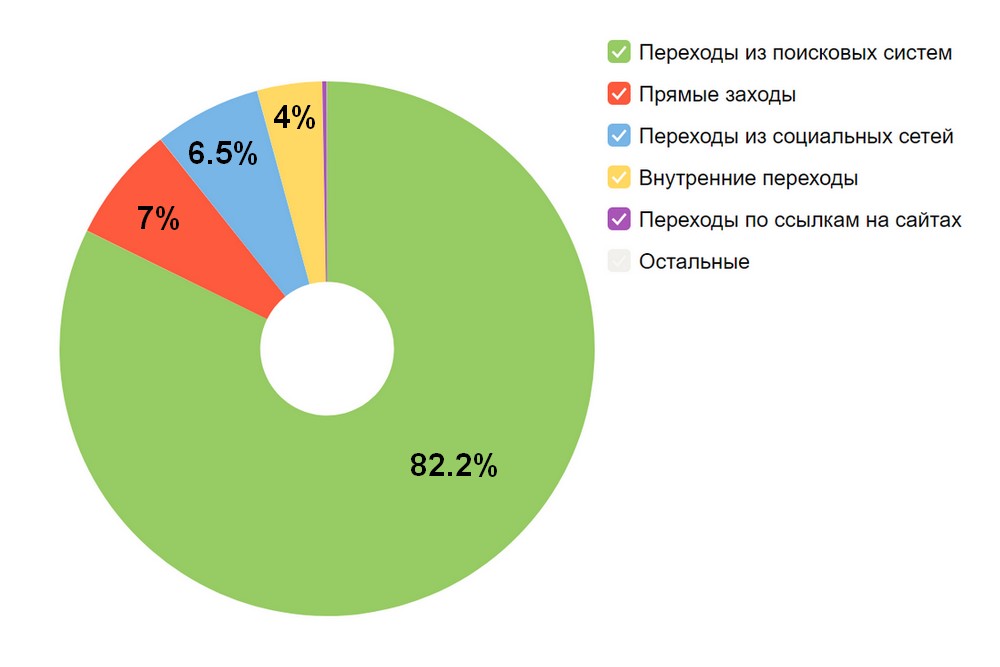
This sample reflects the interests of a group of people who, for one reason or another, have doubts about their orientation and are looking for ways to determine it. It is important to realize that the data presented here cannot be extrapolated to the entire population, but only to those who are still undecided about their sexual orientation.
Category of people experiencing uncertainty about sexual orientation
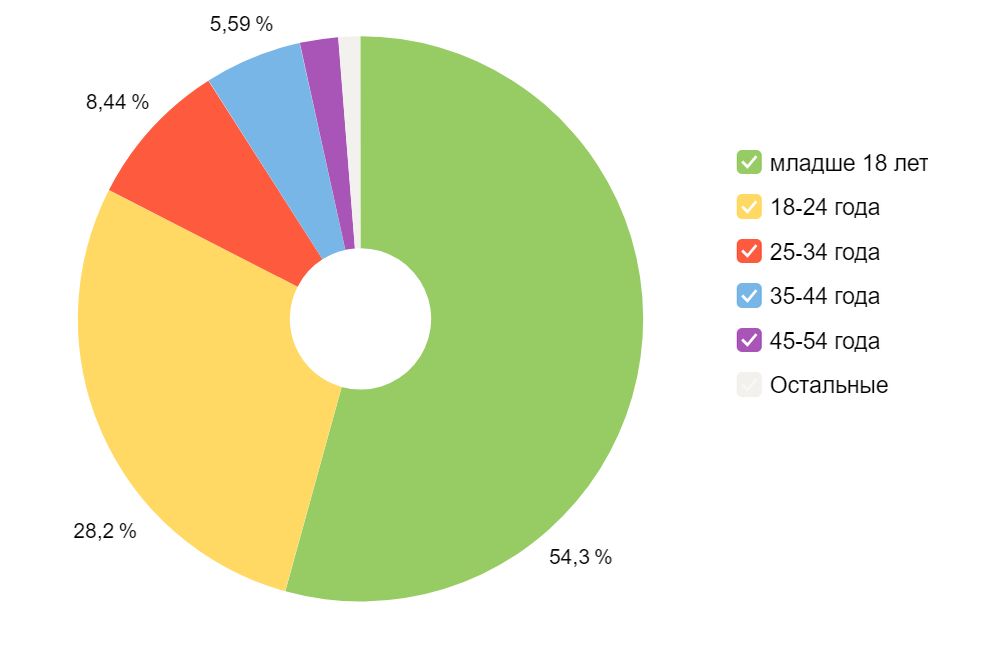
1. The vast majority are young men and women under the age of 24, representing 82.6% of the total.
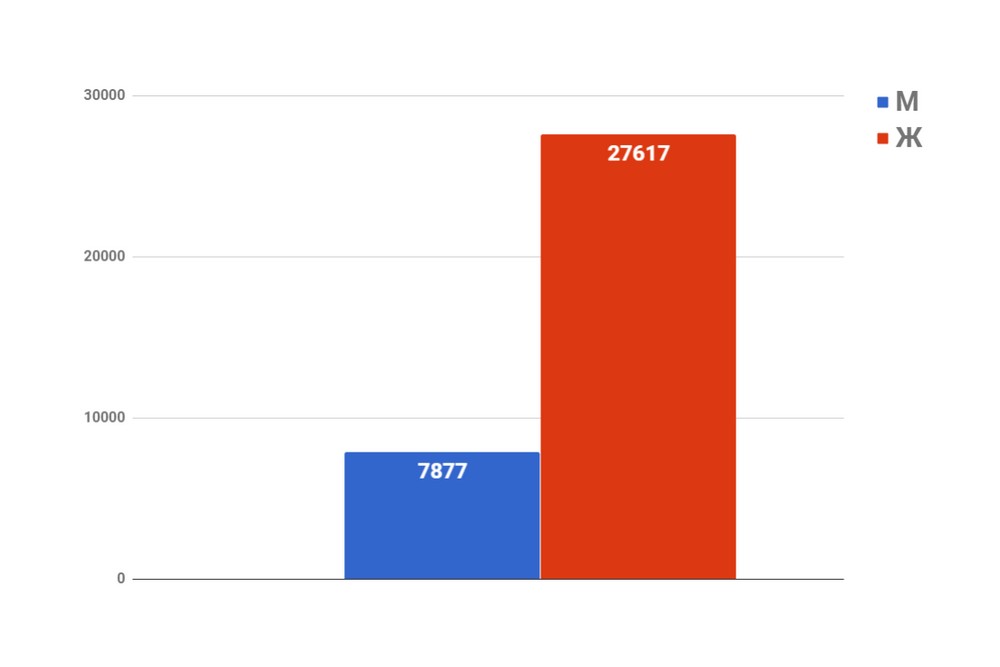
2. Among those who were undecided, the majority are girls, 77.8%.
Conclusions of the sexual orientation test
Men and women demonstrate certain behavioral patterns, which in the same situations may manifest themselves differently and are unconscious. For example, when crossing hot sand on the beach, women often walk on their toes, while men prefer to walk on their heels. Going down a steep slope, men take wide steps while women prefer to walk sideways, and so on.
Although these observations are often based on stereotypes and are not backed up by scientific research. For example, if a man exhibits many habits traditionally associated with women, this may indicate a predisposition to homosexuality. For women, a similar principle applies: the prevalence of "masculine" habits may indicate a non-traditional orientation.
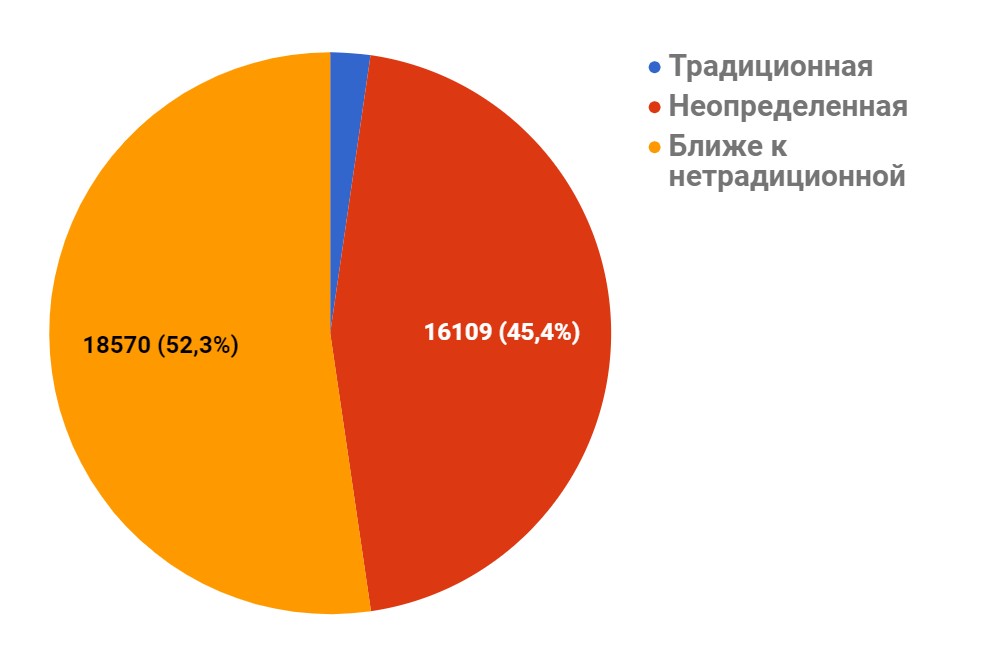
Among the study participants, 2.3% indicated an absolutely traditional orientation, 52.3% showed a tendency to non-traditional orientation, and 45.4% showed habits characteristic of both sexes equally.
Analysis of orientation by gender
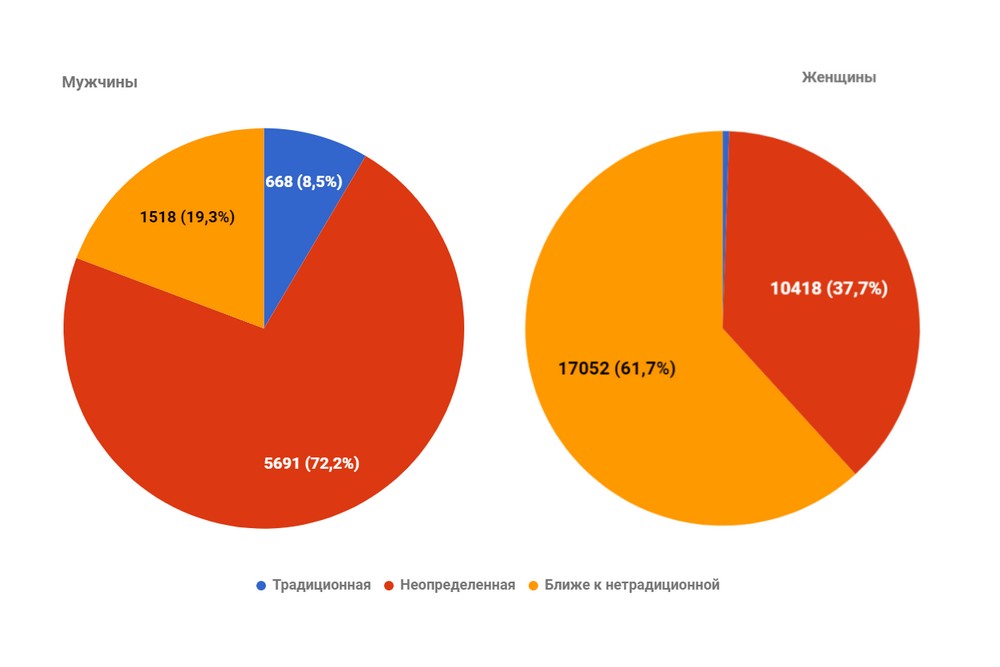
Among the males surveyed only 8.5% exhibit more than 90% of habits traditional to the male gender, while 72.2% remain with an undetermined orientation.
Of the 27,617 girls surveyed 61.7% exhibit habits more typical of men, while only 0.5% (147 people) have predominantly female habits.
In summary, when considering those who actively sought methods to determine their sexual orientation, it can be said that half of them lean towards non-traditional sexual orientation, demonstrating in their life habits and behavior traits traditionally attributed to the opposite sex.