
The concept of the psychological type of a personality was introduced to science by the Swiss psychologist Carl Jung, who first used the definitions of "introvert" and "extrovert" to describe opposite personality types. Here's how he described these terms:
- introvert - a personality focused on analyzing one's own inner world;
- extrovert - a personality focused on the outside world and social interaction.
People of the introverted type usually prefer solitude or quiet environments, avoiding noisy events and frequent social contacts. They are characterized by restraint in behavior, are methodical in thinking, and have the ability for deep self-control of emotions.
Extroverts, on the contrary, seek active communication and new sensations, are characterized by looseness and sociability. They are prone to impulsive behavior, sometimes bordering on aggressiveness, and may have difficulty controlling their emotions and feelings.
There is also a third, rarer personality type, the ambivert, which combines traits from both of the previous types.
Why is it important to take this test?
By determining your personality type on the basis of the test, you will get useful information that will be useful to you in various aspects of life:
- When choosing a professional path.
- In communication and interaction with others.
- In building personal relationships.
- In professional communication.
- To establish contacts with people of different psychotypes.
Examples show that knowing one's psychotype allows one to adapt the working conditions and environment to one's preferences. An extrovert, for example, may feel dissatisfied working in a quiet office environment, while an introvert may exhaust their resources by engaging in active social activities. Understanding your personality type helps you find ways to adapt and improve your well-being in different life situations.
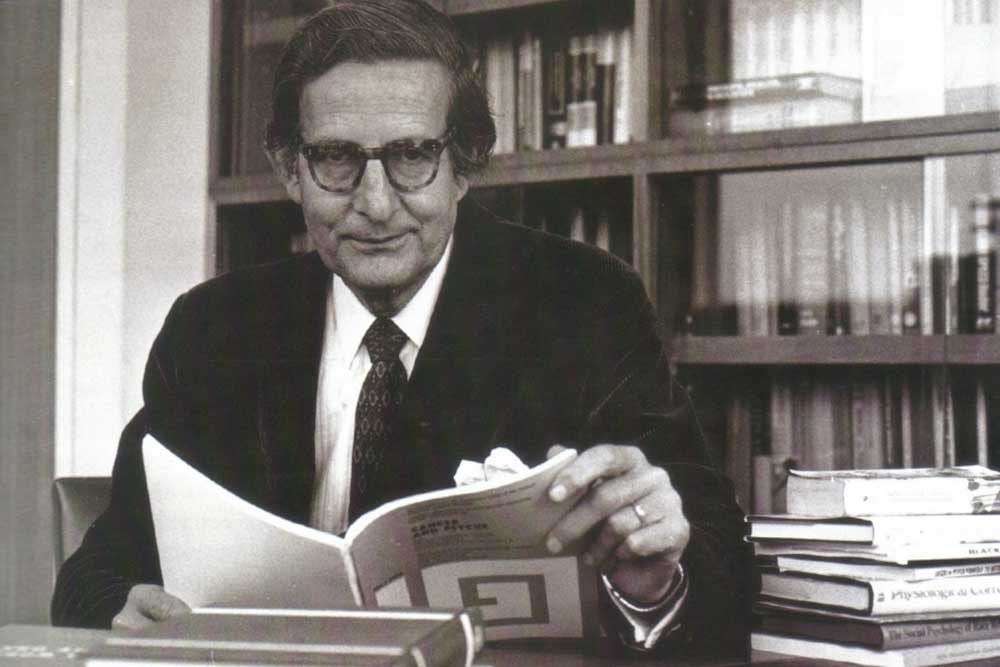
Hans Jürgen Eysenck (04.03.1916 - 04.09.1997)
The test was developed by Hans Jürgen Eysenck, who was born and raised in Germany but was forced to emigrate because of his stance towards the Nazi regime. In 1935, he enrolled at the University of London where he studied psychology and later taught and conducted research there. Eysenck also founded two scientific journals in psychology and made significant contributions to the study of personality types. The beginning of his work on the study of personality types dates back to 1947.
How to take the test
You will be asked to answer 24 questions regarding your behavior and reactions. If you agree with the statement you should select "yes", otherwise you should select "no". It is recommended that you answer quickly, following your first impression.
What will the result show?
By taking the test, you will be able to determine which psychotype your personality belongs to. In addition, you will be suggested books that best suit your personality type, enriching your personal growth and understanding of yourself.
You can take the test to determine your psychotype online on our website. When you sign up, you will get an opportunity to save the results for further analysis.